5 Ways to Optimise Your Product Configurator: A Comprehensive Guide
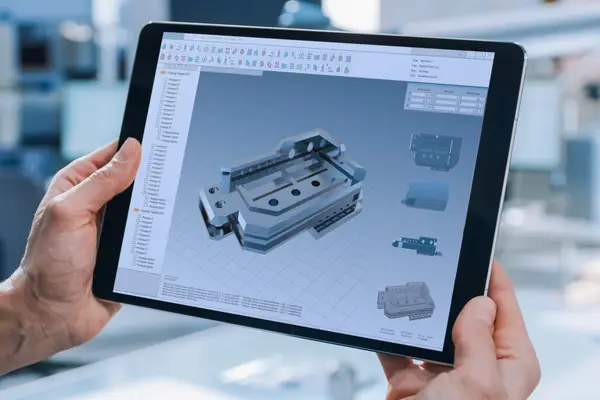
Table of content The Growing Importance of Product Customization 1. User-Friendly Interface 2. Streamlined Product Options3. Real-Time Pricing and Availability4. Integration with CRM and Analytics5. Customer Support and Feedback Conclusion In today’s competitive business landscape, offering customizable products is a key strategy for many companies. Customers appreciate the ability to tailor products to their specific needs and preferences, and this can lead to increased sales and customer loyalty. However, managing a product configurator effectively is no small task. It requires careful planning and optimization to ensure a seamless and satisfying customer experience. This comprehensive guide will explore five ways to optimize your product configurator and maximize its benefits. The Growing Importance of Product Customization Before diving into optimization strategies, let’s take a moment to understand why product customization has become increasingly important in the modern marketplace. Now that we’ve established the significance of product customization, let’s delve into the five essential ways to optimize your product configurator for maximum success. 1. User-Friendly Interface A user-friendly interface is the cornerstone of a successful product configurator. Customers should be able to easily navigate through the configuration process without feeling overwhelmed or confused. Here are some tips to create a user-friendly interface: A. Intuitive Design: Keep the design clean and intuitive. Use clear and concise labels for options, buttons, and features. Visual cues like icons and color coding help users quickly understand the interface. B. Step-by-Step Guidance: Break down the configuration process into manageable steps. Provide clear instructions and guidance at each step to help users make informed choices. A progress bar can also be helpful to show users how far along they are in the configuration process. C. Responsive Design: Ensure that your product configurator is responsive and works seamlessly on various devices, including desktops, tablets, and smartphones. This is crucial for catering to a wide range of customers. D. Visual Previews: Include visual previews of the product as users make selections. This allows customers to see how their choices impact the final product, which can be a powerful motivator for completing the configuration process. E. Error Handling: Implement robust error handling to catch and address any mistakes or inconsistencies in the configuration. Provide clear error messages and suggestions for correction to minimize user frustration. 2. Streamlined Product Options While customization is valuable, it’s essential to balance offering enough options and overwhelming customers with choices. Here’s how you can streamline product options effectively: A. Relevant Choices: Offer choices that are relevant to the product and the customer’s needs. Avoid including options that are too niche or rarely selected. Conduct market research to identify the most popular customization options. B. Smart Defaults: Set intelligent default options based on common customer preferences. These defaults can save customers time and effort while still allowing them to customize as desired. C. Conditional Logic: Use conditional logic to display options based on previous selections. This ensures that customers are only presented with choices that make sense in the context of their previous selections, reducing confusion. D. Bundling: Consider offering pre-configured bundles or packages that include popular combinations of customization options. This simplifies the decision-making process for customers who may be overwhelmed by too many choices. Also Read: What is RFID and how does RFID tags, RFID readers work 3. Real-Time Pricing and Availability Customers often want to know how their customizations impact the final price and product availability. Providing real-time pricing and availability information is crucial for transparency and customer satisfaction. Here’s how to achieve this: A. Dynamic Pricing: Implement a dynamic pricing system that adjusts the total price as customers make customization selections. Clearly display the price changes so that customers can make informed decisions. B. Inventory Tracking: Integrate your product configurator with your inventory management system to ensure that customers are informed about the availability of their customized product. If a particular configuration is out of stock, provide estimated restock dates or alternative options. C. Pricing Breakdown: Offer a detailed pricing breakdown that shows how each customization choice contributes to the final cost. This transparency builds trust and helps customers understand the value they are getting. 4. Integration with CRM and Analytics To optimize your product configurator, you need insights into customer behavior and preferences. Integrating it with Customer Relationship Management (CRM) systems and analytics tools can provide valuable data. Here’s how: A. Customer Profiles: Use CRM integration to create and update customer profiles based on their configuration choices. This allows you to personalize future marketing efforts and product recommendations. B. Analytics Tracking: Implement robust analytics tracking to monitor user interactions with the configurator. Track drop-off points, popular customizations, and any usability issues. Use this data to make continuous improvements. C. A/B Testing: Conduct A/B tests to compare different configurations of your product configurator. Test variations in design, layout, and the number of customization options to determine what resonates best with your audience. 5. Customer Support and Feedback Even with a well-optimized product configurator, some customers may have questions or encounter issues. Providing excellent customer support and collecting feedback is essential for ongoing improvement: A. Live Chat and FAQs: Offer live chat support during the configuration process to assist customers in real time. Create a comprehensive FAQ section that addresses common questions and issues. B. Feedback Forms: Implement feedback forms at the end of the configuration process to gather customer insights. Ask for their opinions on usability, customization options, and overall satisfaction. C. Continuous Iteration: Use customer feedback to drive continuous iteration and improvement of your product configurator. Identify pain points and areas where customers struggle, and make necessary adjustments. Also Read: The emergence of computer vision market Conclusion A well-optimized product configurator can be a powerful tool for increasing sales and enhancing the customer experience. By focusing on a user-friendly interface, streamlined options, real-time pricing and availability, integration with CRM and analytics, and excellent customer support and feedback, you can create a configurator that not only meets but exceeds customer expectations. Remember that optimization is an ongoing process, and staying attuned to customer
Read More
Introduction to IIoT: Unleashing the Power of Connected Industrial Systems
Table of content The Essence of IIoT Components of IIoT The Benefits of IIoT Challenges and Considerations IIoT Applications Across Industries Conclusion In the ever-evolving technology, integrating digital innovation into various sectors has paved the way for unprecedented advancements. One such groundbreaking transformation is the emergence of the Industrial Internet of Things (IIoT), which is revolutionizing industrial processes and systems on a global scale. The IIoT has become a catalyst for enhancing efficiency, productivity, and connectivity in industries, allowing for a new era of smarter and more informed decision-making. This article will explore the world of IIoT, its significance, components, benefits, challenges, and transformative potential across industries. The Essence of IIoT A subset of the larger Internet of Things (IoT) idea, the Industrial Internet of Things (IIoT)focuses on the networking of equipment, machinery, sensors, and systems in industrial settings. It entails the seamless fusion of analog and digital systems, allowing for real-time data exchange, analysis, and cooperation. The IIoT enables a connected ecosystem where information flows effortlessly across diverse components, unlike previous industrial processes, which frequently worked in silos with minimal data sharing. Components of IIoT The IIoT ecosystem consists of various components that work in tandem to create a sophisticated network of connected industrial systems. These components include: ● Sensors and Actuators At the core of IIoT are sensors and actuators that collect data from the physical world and translate it into digital signals. Sensors monitor parameters such as temperature, pressure, humidity, vibration, and more, providing real-time insights into the operational status of machinery and equipment. On the other hand, actuators receive commands from the digital realm and initiate physical actions, allowing for remote control and automation. ● Connectivity Connectivity forms the backbone of IIoT, enabling devices and systems to communicate and share data. Communication protocols like Wi-Fi, Ethernet, Bluetooth, and cellular networks facilitate seamless data transmission across different components. Additionally, edge computing, which involves processing data at the local level before sending it to the cloud, reduces latency and enhances real-time decision-making. ● Cloud Computing and Data Analytics The data generated by IIoT devices is transferred to cloud-based platforms for storage, processing, and analysis. Cloud computing enables the storage of vast amounts of data and provides the computational power required for complex analytics. Advanced data analytics techniques, including AI and ML, allow organizations to extract valuable insights, predict maintenance needs, optimize processes, and make informed decisions. ● Industrial Automation and Control Systems IIoT’s integration with industrial automation and control systems has led to enhanced efficiency and reduced human intervention. Programmable Logic Controllers (PLCs), Distributed Control Systems (DCS), and Supervisory Control and Data Acquisition (SCADA) systems can now be interconnected, enabling centralized monitoring and control of industrial processes. This connectivity streamlines operations and improves response times to anomalies. ● Cybersecurity Measures As industries become more connected, the importance of cybersecurity becomes paramount. IIoT devices and networks are at risk of cyber threats that might disrupt operations, compromise sensitive data, and pose safety risks. Robust cybersecurity measures, including encryption, authentication, intrusion detection systems, and regular updates, are essential to safeguard the integrity of IIoT ecosystems. The Benefits of IIoT The adoption of IIoT offers several advantages that have the potential to transform industries. Some key benefits are: ● Enhanced Operational Efficiency IIoT enables real-time monitoring of industrial processes, allowing for proactive identification of inefficiencies and optimization opportunities. This reduces downtime, increases production output, and improves resource utilization. ● Predictive Maintenance One of the standout advantages of IIoT is its ability to enable predictive maintenance. By continuously monitoring equipment performance and analyzing data trends, organizations can predict when machinery is likely to fail. This approach minimizes unplanned downtime, extends the lifespan of assets, and reduces maintenance costs. ● Data-Driven Decision Making The wealth of data collected through IIoT devices provide organizations with actionable insights. Data analytics tools help organizations make informed decisions, identify market trends, understand customer preferences, and refine business strategies. ● Supply Chain Optimization IIoT facilitates end-to-end visibility across the supply chain, from raw material suppliers to end consumers. This transparency allows organizations to streamline logistics, reduce lead times, and optimize inventory levels, resulting in cost savings and improved customer satisfaction. ● Quality Control and Compliance IIoT plays a crucial role in industries that prioritize quality control and regulatory compliance. Real-time monitoring and data analysis ensure that products meet desired standards and compliance requirements consistently. ● Worker Safety Connected sensors can be deployed to monitor workplace conditions and detect potential safety hazards. In hazardous environments, IIoT devices can alert workers and supervisors in case of emergencies, reducing the risk of accidents and injuries. Challenges and Considerations While the potential benefits of IIoT are substantial, there are several challenges that organizations must address during implementation: IIoT Applications Across Industries The transformative potential of IIoT spans a wide range of industries, each benefiting from its unique capabilities. Some industries where it has proved beneficial are: ● Manufacturing In manufacturing, IIoT optimizes production processes, reduces defects, and enhances overall efficiency. Smart factories equipped with IIoT technologies enable real-time monitoring of equipment, predictive maintenance, and adaptive production processes. ● Energy and Utilities IIoT enhances energy management by enabling remote monitoring and control of power generation, distribution, and consumption. Smart grids, equipped with IIoT sensors, facilitate real-time energy optimization and fault detection. ● Agriculture In agriculture, IIoT assists in precision farming by monitoring soil conditions, weather patterns, and crop health. This data-driven approach enables farmers to optimize irrigation, minimize resource wastage, and improve yield. ● Healthcare In healthcare, IIoT devices can monitor patients’ vital signs, transmit data to healthcare providers, and enable remote diagnostics. This facilitates personalized care, reduces hospitalization, and improves patient outcomes. ● Transportation and Logistics IIoT enhances fleet management and logistics by tracking vehicles, optimizing routes, and monitoring cargo conditions. This results in reduced fuel consumption, improved delivery times, and enhanced customer satisfaction. Conclusion The Industrial Internet of Things represents a monumental shift in how industries operate, innovate, and grow. IIoT offers an unparalleled opportunity to enhance operational efficiency, drive cost savings, and unlock new revenue streams by utilizing the power of connected devices, data analytics, and automation. While challenges exist, proactive planning, robust cybersecurity measures, and investments in skill development can help organizations capitalize on the full potential of IIoT. Prescient can
Read More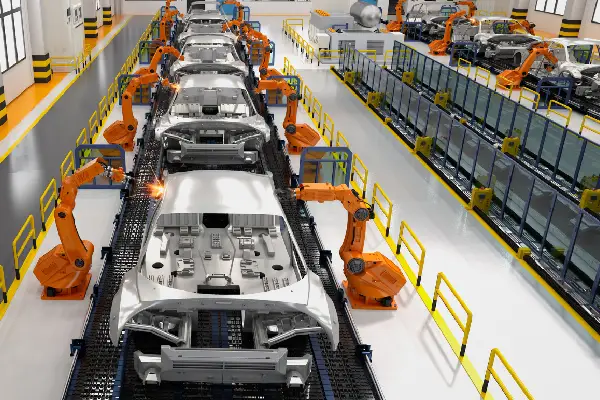
Exploring the Benefits of IIoT for Manufacturing Efficiency and Productivity
Table of content Understanding the Industrial Internet of Things (IIoT) Benefits of IIoT for Manufacturing Conclusion Does IIoT shape the future of manufacturing efficiency and productivity? In the dynamic realm of manufacturing, where innovation constantly redefines traditional processes, a key player has emerged on the technological stage: the Industrial Internet of Things (IIoT). As manufacturing industries seek novel avenues to optimize their operations, IIoT stands out as a game-changer, promising a host of benefits that hold the potential to revolutionize the way products are created. This article delves into the manifold advantages of IIoT to the manufacturing sector, illuminating its capacity to elevate efficiency and productivity to unprecedented heights. Understanding the Industrial Internet of Things (IIoT) The term Industrial Internet of Things (IIoT) describes how industrial equipment, such as sensors, machinery, and other assets, are connected to the Internet to communicate and gather data. The Industrial Internet of Things (IIoT) is geared towards industrial settings. It emphasizes the integration of smart technology in production processes, in contrast to the consumer-oriented Internet of Things (IoT), which focuses on linking common goods. Benefits of IIoT for Manufacturing The Industrial Internet of Things (IIoT) has emerged as a game-changing technology in the manufacturing sector, offering many benefits that enhance efficiency and boost productivity. Here are some key advantages of implementing IIoT in manufacturing: ● Real-Time Monitoring and Data Analytics One of the primary advantages of IIoT in manufacturing is real-time monitoring and data analytics. Traditional manufacturing processes often rely on periodic manual checks and routine maintenance. However, IIoT-enabled sensors and devices continuously gather data on various aspects of the production line, such as machine performance, temperature, humidity, and energy consumption. This real-time data empowers manufacturers with actionable insights that facilitate quick decision-making. By identifying bottlenecks, predicting machine failures, and optimizing production schedules, IIoT enables manufacturers to operate with greater efficiency. For instance, if a machine’s temperature rises above a safe threshold, IIoT sensors can trigger an alert, allowing maintenance personnel to address the issue before it escalates into a costly breakdown. ● Predictive Maintenance IIoT’s impact on manufacturing efficiency is particularly evident in the realm of predictive maintenance. Traditional maintenance practices are often based on predetermined schedules, leading to either unnecessary maintenance expenses or unexpected downtime due to equipment failure. IIoT transforms this approach by enabling predictive maintenance through continuously monitoring equipment conditions. By analyzing data patterns and performance trends, IIoT systems can predict when a machine is likely to fail. This empowers manufacturers to schedule maintenance activities precisely when needed, minimizing downtime and maximizing the lifespan of the equipment. As a result, production processes become more reliable, efficient, and cost-effective. ● Enhanced Supply Chain Management Efficient supply chain management is crucial for maintaining steady manufacturing operations. IIoT contributes to optimizing the supply chain with the help of real-time visibility into the movement of goods, materials, and components. Smart sensors and tracking devices embedded in products and packaging allow manufacturers to track shipments’ location, condition, and status throughout the entire supply chain. This degree of openness facilitates efficient inventory management, minimizes delays, and avoids stockouts. To maintain optimal inventory levels, manufacturers can quickly adapt production schedules to fluctuations in demand. As a result, IIoT-enabled supply chain management increases operational efficiency and improves customer satisfaction while reducing waste. ● Process Automation and Efficiency IIoT facilitates process automation by enabling seamless communication and collaboration between machines, systems, and human operators. Intelligent devices equipped with sensors can gather data from various stages of the production process, making it possible to automate tasks that were previously manual and time-consuming. For example, in a manufacturing line producing automotive components, IIoT-connected robots can automatically adjust their movements and actions based on real-time data inputs. This not only ensures consistent quality but also accelerates the production process by eliminating the need for manual intervention. The result is higher throughput, reduced error rates, and increased overall efficiency. ● Data-Driven Decision Making Informed decision-making is at the heart of effective manufacturing management. IIoT amplifies the decision-making process by providing access to a wealth of data-driven insights. With real-time information on machine performance, production rates, and quality metrics, managers can make more accurate and timely decisions. IIoT data analytics can reveal patterns and correlations that might not be apparent through traditional methods. This enables manufacturers to identify opportunities for process optimization, cost reduction, and quality enhancement. By leveraging these insights, manufacturing managers can fine-tune their strategies, improving operational performance and increasing competitiveness. ● Quality Control and Defect Prevention Maintaining product quality is a top priority for manufacturers, and IIoT plays a pivotal role in ensuring consistent quality control. Smart sensors embedded in production equipment can detect even the slightest deviations from desired specifications. This real-time monitoring allows manufacturers to identify defects early in the production process, preventing the creation of faulty products. Moreover, IIoT facilitates root cause analysis by capturing detailed data on production parameters. When a quality issue arises, manufacturers can trace back through the data to identify the exact point of failure and implement corrective measures. This not only reduces scrap and rework but also establishes a culture of continuous improvement. ● Customization and Flexibility The modern market demands products that are tailored to specific customer needs, which requires manufacturing processes to be flexible and adaptable. IIoT technology contributes to this flexibility by enabling rapid reconfiguration of production lines and processes. Manufacturers can use IIoT to monitor real-time demand patterns and adjust production schedules accordingly. This allows for efficient batch production and on-the-fly customization, minimizing lead times and reducing excess inventory. Whether adjusting product specifications or changing production volumes, IIoT empowers manufacturers to stay responsive to market demands. ● Workforce Empowerment IIoT not only transforms machinery but also empowers the workforce. With access to real-time data and insights, operators and technicians can make informed decisions and take proactive actions. IIoT systems can provide operators with alerts, notifications, and guidance, helping them optimize machine settings and respond to anomalies promptly. Moreover, IIoT offers training and skill development opportunities. As technology becomes more integrated into manufacturing processes, workers can learn to operate and troubleshoot sophisticated IIoT-enabled equipment. This not only enhances their skill set but also contributes to a
Read More
Optimization Strategies in Knowledge-Based Engineering for Manufacturing Processes
Table of content The Evolution of Knowledge-Based Engineering The Importance of Optimization in Manufacturing Optimization Strategies in Knowledge-Based Engineering 1. Design Exploration and Parametric Optimization2. Generative Design3. Process Optimization4. Multi-Objective Optimization5. Knowledge-Based Decision Support Applications of Optimization in Knowledge-Based Engineering 1. Aerospace Industry2. Automotive Manufacturing3. Pharmaceutical Manufacturing4. Sustainable Manufacturing5. Consumer Electronics Future Trends and Challenges Conclusion Manufacturing processes have undergone significant transformations in recent years, emphasizing efficiency, precision, and cost-effectiveness. Knowledge-Based Engineering (KBE) has emerged as a crucial framework that combines engineering knowledge with computational tools to streamline the design and manufacturing processes. This article will explore the optimization strategies employed in Knowledge-Based Engineering for manufacturing processes, highlighting their importance, applications, and future potential. The Evolution of Knowledge-Based Engineering Before delving into optimization strategies, it’s essential to understand the evolution of Knowledge-Based Engineering and its role in manufacturing. KBE is a discipline that integrates knowledge from various domains, including engineering, materials science, and manufacturing, into a digital framework. This framework allows engineers and designers to leverage existing knowledge and expertise to expedite product development and enhance manufacturing processes. The roots of KBE can be traced back to Artificial Intelligence (AI) and Expert Systems, which aimed to replicate human expertise in solving complex problems. Over time, KBE has evolved to incorporate advanced techniques such as machine learning, knowledge representation, and optimization algorithms. This evolution has paved the way for KBE to play a pivotal role in modern manufacturing. The Importance of Optimization in Manufacturing Optimization lies at the heart of efficient and cost-effective manufacturing processes. It involves finding the best combination of parameters or variables to achieve specific goals while minimizing costs or maximizing performance. In manufacturing, optimization can address various challenges, including: Read More: India’s Growing Video Surveillance Market Optimization Strategies in Knowledge-Based Engineering Knowledge-based engineering employs various optimization strategies to address the challenges mentioned above. These strategies harness the power of data, knowledge, and advanced algorithms to drive efficiency and innovation in manufacturing processes. Here are some key optimization strategies used in KBE: 1. Design Exploration and Parametric Optimization KBE systems enable engineers to explore a wide range of design alternatives quickly. By defining design parameters and constraints, engineers can use optimization algorithms to find the best design that meets predefined objectives. This approach not only accelerates the design process but also ensures that the final product is optimized for performance, cost, and manufacturability. 2. Generative Design Generative design is an advanced optimization technique that leverages AI and computational algorithms to generate innovative design solutions. Engineers input design goals and constraints, and the generative design software explores countless possibilities, often coming up with unconventional and highly efficient designs that human designers may not have considered. 3. Process Optimization Manufacturing processes often involve intricate workflows with multiple variables. KBE systems use optimization algorithms to fine-tune these processes by adjusting parameters such as temperature, pressure, and feed rates. This improves process efficiency, reduces energy consumption, and minimizes waste. 4. Multi-Objective Optimization In many manufacturing scenarios, multiple conflicting objectives must be considered simultaneously. Multi-objective optimization algorithms enable engineers to find solutions that balance these objectives. For example, manufacturers may want to minimize production costs while maximizing product quality and sustainability. KBE can help identify the best compromise among these objectives. 5. Knowledge-Based Decision Support KBE systems integrate expert knowledge and best practices into decision support tools. This knowledge can guide engineers and designers in making informed decisions throughout the product development and manufacturing processes. By providing access to a wealth of expertise, KBE enhances decision-making and leads to optimized outcomes. Applications of Optimization in Knowledge-Based Engineering The applications of optimization in Knowledge-Based Engineering for manufacturing processes are diverse and impactful. Let’s explore some real-world examples: 1. Aerospace Industry In the aerospace industry, where safety and performance are paramount, KBE systems are used to optimize aircraft design, engine performance, and manufacturing processes. Parametric optimization ensures that aircraft components are lightweight, fuel-efficient, and aerodynamically sound. 2. Automotive Manufacturing Automotive manufacturers employ KBE for vehicle design and production optimization. Generative design techniques help create lightweight yet structurally robust components, while process optimization minimizes assembly line bottlenecks and reduces production costs. 3. Pharmaceutical Manufacturing Pharmaceutical companies use KBE to optimize drug formulation processes, ensuring the consistent quality and efficacy of medications. Multi-objective optimization balances production costs, regulatory compliance, and product quality. 4. Sustainable Manufacturing Optimization plays a pivotal role in achieving sustainability goals. For example, in the paper and pulp industry, KBE is used to optimize resource allocation, reducing energy consumption and minimizing waste. Similarly, in renewable energy sectors, KBE aids in optimizing the design and operation of wind turbines and solar panels for maximum energy production. 5. Consumer Electronics The rapid pace of innovation in the consumer electronics industry demands efficient design and manufacturing processes. KBE tools are used to optimize the form and function of electronic devices while minimizing production costs. Also Read: What is Asset Tracking and What are its Benefits Future Trends and Challenges As technology continues to advance, the field of Knowledge-Based Engineering for manufacturing processes is expected to evolve further. Here are some future trends and challenges to watch for: Conclusion Knowledge-based engineering has ushered in a new era of optimization in manufacturing processes. By leveraging engineering knowledge, data, and advanced algorithms, KBE systems enable engineers and designers to create more efficient and sustainable products and processes. The future holds even more promise, with AI, digital twins, and sustainability playing pivotal roles in shaping the landscape of manufacturing optimization. As manufacturers continue to embrace KBE, the industry will undoubtedly see further improvements in efficiency, cost-effectiveness, and sustainability, driving innovation and progress in the world of manufacturing. If you’re ready to take your manufacturing processes to the next level with state-of-the-art Knowledge-Based Engineering solutions, consider exploring what Prescient offers. Their expertise in KBE can help you optimize your operations and stay ahead in the competitive manufacturing landscape. Don’t miss the opportunity to transform your manufacturing processes with Prescient’s cutting-edge solutions.
Read More
A Comprehensive Guide to Energy Management Information Systems (EMIS)
Table of content Understanding EMIS Key Components of EMIS Benefits of EMIS Implementation Challenges in EMIS Implementation EMIS Implementation Best Practices EMIS and the Future Conclusion In today’s quickly changing world, energy management has emerged as a top priority for all parties, including people, corporations, and governments. Effective energy management solutions are more important than ever due to rising expenses, increased energy demand, and growing environmental concerns. Energy Management Information Systems (EMIS) are useful in this situation. This in-depth manual will delve into the world of EMIS, examining what they are, how they operate, what they offer, what issues they present, and how they contribute to a more sustainable future. Understanding EMIS Modern software systems called Energy Management Information Systems (EMIS) are created to track, manage, and optimize how much energy is used in industrial processes, buildings, and other facilities. Using EMIS, businesses may gather, examine, and act on real-time energy data to make decisions that will cut costs, increase efficiency, and have the least possible negative environmental effects. These systems offer a comprehensive picture of energy use across various industries, including data centers, transportation networks, manufacturing facilities, office buildings, and industrial facilities. Key Components of EMIS EMIS comprises several key components that work in tandem to provide a comprehensive solution for efficient energy management. These include: ● Data Collection and Monitoring EMIS gathers energy-related data from various sources, such as meters, sensors, and building automation systems. This data includes information on electricity, natural gas, water, temperature, occupancy, etc. Real-time monitoring ensures that organizations have an up-to-date view of energy usage patterns. ● Data Analysis and Reporting The collected data is processed and analyzed with advanced algorithms and machine-learning techniques. EMIS generates insightful reports, dashboards, and visualizations that provide stakeholders with actionable insights into energy consumption trends, anomalies, and potential areas for improvement. ● Energy Modeling and Simulation Some EMIS incorporate energy modeling and simulation capabilities. This allows organizations to simulate different scenarios and strategies to identify the best ways to optimize energy consumption while maintaining comfort and operational requirements. ● Alerts and Notifications EMIS can be configured to send alerts and notifications when energy consumption exceeds predefined thresholds or when anomalies are detected. This proactive approach enables prompt responses to deviations from expected energy usage patterns. ● Automated Control and Optimization Advanced EMIS can automate energy-saving measures by controlling systems such as HVAC (Heating, Ventilation, and Air Conditioning), lighting, and industrial processes. This ensures that energy-consuming systems operate efficiently and are adjusted in real-time depending on demand and external factors. ● Benchmarking and Comparison EMIS often allows organizations to compare their energy performance with industry standards or similar facilities. Benchmarking facilitates setting realistic energy reduction goals and tracking progress over time. Benefits of EMIS Implementation Adopting Energy Management Information Systems can yield a wide array of benefits for organizations, regardless of their size or sector. Some of these benefits include: 1. Cost Savings EMIS enables organizations to identify energy wastage and inefficiencies, reducing energy consumption and lowering utility bills. Organizations can allocate their budgets efficiently and invest in other critical areas by optimizing energy use. 2. Environmental Sustainability Reducing energy consumption directly contributes to a lower carbon footprint. EMIS empowers organizations to track their greenhouse gas emissions, align with sustainability goals, and contribute to a greener future. 3. Data-Driven Decision Making EMIS provides data-driven insights that support informed decision-making. Organizations can identify trends, patterns, and outliers in energy consumption, enabling them to make strategic choices to optimize operations. 4. Operational Efficiency Real-time monitoring and automated control functionalities offered by EMIS enhance operational efficiency. Systems like HVAC can be adjusted based on occupancy patterns and external conditions, ensuring optimal comfort while minimizing energy waste. 5. Regulatory Compliance EMIS aids organizations in complying with energy-related regulations and standards. By tracking and reporting energy consumption data, organizations can avoid penalties and maintain a good reputation with regulatory bodies. 6. Predictive Maintenance Some EMIS platforms can predict equipment failures and maintenance needs by analyzing energy consumption patterns. This proactive approach minimizes downtime and extends the lifespan of the equipment. Challenges in EMIS Implementation While the benefits of EMIS are significant, implementing and maintaining these systems can pose challenges. Some challenges that might pop up are: 1. Data Quality and Integration EMIS effectiveness hinges on accurate and reliable data. Integrating data from diverse sources, ensuring compatibility, and addressing data gaps can be complex and time-consuming. 2. Initial Investment The upfront costs of implementing EMIS, including hardware, software, and staff training, can be substantial. However, the long-term cost savings often outweigh the initial investment. 3. Change Management Introducing EMIS may require changes in organizational processes and employee behaviors. Overcoming resistance to change and ensuring proper training are crucial for successful implementation. 4. Data Security Data security is a paramount concern due to the increasing reliance on digital systems. Protecting sensitive energy consumption data from cyber threats is essential to maintain the integrity of EMIS. 5. Complexity EMIS can be intricate systems, particularly in large and diverse organizations. Ensuring the system is user-friendly, and the data is understandable is important for driving meaningful actions. EMIS Implementation Best Practices Successfully implementing an Energy Management Information System (EMIS) requires careful planning and execution. Here are some best practices to ensure a smooth and effective implementation: By following these practices, organizations can maximize the benefits of EMIS and drive sustainable energy management outcomes. EMIS and the Future As the world continues to grapple with energy challenges and environmental concerns, the role of EMIS becomes increasingly vital. These systems will play a crucial role in shaping a more sustainable future by enabling organizations and individuals to take control of their energy consumption. With advancements in technology, integrating IoT (Internet of Things), AI (Artificial Intelligence), and cloud computing will further enhance the capabilities of EMIS. Conclusion Energy Management Information Systems (EMIS) are pivotal tools for organizations seeking to manage their energy consumption effectively, reduce costs, and contribute to a greener world. EMIS empowers stakeholders to make informed decisions and optimize energy usage across various sectors by providing real-time data, analysis, and automation. While challenges in implementation exist, the long-term benefits, including cost savings, environmental sustainability,
Read More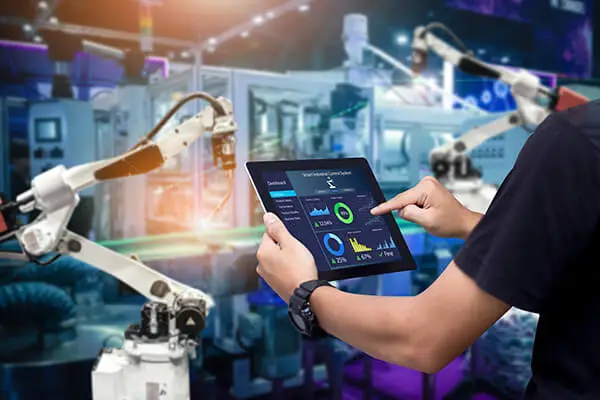
Emerging Trends in Digital Factories: Shaping the Future of Manufacturing
Table of content Understanding Digital Factories Emerging Trends in Digital Factories Emerging Trends in Digital Factories Conclusion Digital transformation is fueling unheard-of developments in the industrial setup’s quickly changing landscape, resulting in the rise of digital factories. These cutting-edge manufacturing facilities are at the forefront of innovation, utilizing state-of-the-art technology to streamline procedures, boost productivity, and reimagine manufacturing processes. Several major trends are influencing the future of manufacturing as we move deeper into the twenty-first century, and digital factories are at the center of this shift. Understanding Digital Factories At its core, a digital factory is a manufacturing facility that leverages advanced digital technologies to optimize and streamline every facet of the production process. It represents a convergence of physical manufacturing with digital capabilities, resulting in a seamless integration of data, machines, and processes. Unlike conventional manufacturing, where physical operations often dominate, digital factories place data-driven decision-making and automation at the forefront. Central to the concept of a digital factory is the idea of interconnectedness. This interconnectedness spans machines, sensors, devices, and even personnel, creating a networked ecosystem that enables real-time data sharing and collaboration. The data generated by these interconnected systems provides insights that drive operational improvements, enhance product quality, and facilitate predictive maintenance. Emerging Trends in Digital Factories Now that we have a solid understanding of what digital factories entail, let’s delve into the emerging trends shaping their trajectory and influencing the future of manufacturing. ● Smart Manufacturing and Industry 4.0 The fourth industrial revolution is leading in an era of smart manufacturing that relies on interconnected systems and real-time data analysis. Digital factories leverage technologies like the Internet of Things (IoT) and Artificial Intelligence (AI) to create highly interconnected ecosystems. These ecosystems enable machines, sensors, and devices to communicate and collaborate autonomously, leading to seamless production processes and real-time decision-making. Integrating Industry 4.0 principles in digital factories enables predictive maintenance, where machines can identify and address potential issues before they result in downtime. This predictive approach reduces operational disruptions and optimizes maintenance schedules, thereby improving overall productivity and resource utilization. ● Robotics and Automation Automation has been a cornerstone of manufacturing for decades, but digital factories are taking it to new heights with the integration of advanced robotics. Collaborative robots, or cobots, are becoming increasingly common in these settings. These robots can work alongside human operators, enhancing efficiency and precision in tasks ranging from assembly to quality control. Machine learning algorithms are also employed to teach robots complex tasks, enabling them to adapt to changing environments and requirements. This increases flexibility and reduces the need for reprogramming when tasks change, making manufacturing processes more agile. ● Digital Twins Digital twins are virtual copies of physical products, processes, or systems. These twins are created in digital factories to simulate and analyze various aspects of the production process. By generating a digital representation of a product or a production line, manufacturers can run simulations and scenarios to optimize efficiency, test different variables, and identify potential bottlenecks. Digital twins enable data-driven decision-making by providing insights into how changes in one aspect of the process might impact the entire production line. This technology minimizes risks, accelerates development cycles, and enhances overall product quality. ● Additive Manufacturing and 3D Printing Additive manufacturing, commonly known as 3D printing, revolutionizes how products are designed and produced. Digital factories capitalize on this technology to create intricate and customized components with reduced material waste. This approach simplifies the production process and allows for on-demand manufacturing, reducing the need for large inventories. Moreover, additive manufacturing enables the production of complex geometries that were earlier challenging or impossible to create using traditional manufacturing methods. This level of design freedom opens up new possibilities for innovation across industries. ● Data-Driven Decision Making The influx of data generated by interconnected systems in digital factories is a goldmine for informed decision-making. With advanced data analytics, manufacturers can gain insights into production trends, performance metrics, and customer preferences. This information helps optimize processes, identify areas for improvement, and tailor products to meet market demands more effectively. Machine learning and AI algorithms can detect patterns in large datasets that human analysts might miss. This predictive analysis can guide manufacturers in adapting to changing market conditions swiftly and proactively. ● Cybersecurity Challenges The interconnected nature of digital factories presents both opportunities and challenges. The primary challenge often encountered is cybersecurity. With the increase in interconnected devices and data exchange, the potential attack surface for malicious actors also expands. Securing sensitive production data, proprietary designs, and critical infrastructure becomes paramount. Manufacturers must implement robust cybersecurity measures to safeguard their digital factories against cyber threats. This includes encryption, multi-factor authentication, intrusion detection systems, and regular security audits. ● Sustainability and Green Manufacturing As the world grapples with environmental concerns, sustainability has become a central focus for industries, including manufacturing. Digital factories are contributing to sustainable practices through various means. One of the ways this is achieved is by optimizing processes to reduce waste and energy consumption. Data-driven insights enable manufacturers to identify inefficiencies and implement eco-friendly solutions. Additive manufacturing also plays a role in sustainability by minimizing material waste, and it has the potential to revolutionize supply chains with localized production. This helps reduce the carbon footprint in relation to the transportation and storage of goods. ● Global Supply Chain Transformation Digital factories are reshaping traditional global supply chains. By adopting localized manufacturing practices and leveraging technologies like additive manufacturing, companies can reduce their dependence on complex and lengthy supply chains. This shift allows for quicker response times to market demands, reduced lead times, and greater flexibility in addressing regional preferences. ● Skill Transformation and Workforce Development Integrating advanced technologies in digital factories necessitates a shift in workforce skills. As automation and AI become more prevalent, workers must acquire new skills to manage and maintain these technologies. Upskilling and reskilling programs are becoming essential to ensure that the workforce remains relevant and adaptable in the face of technological changes. ● Human-Machine Collaboration While automation and robotics are advancing, human workers remain integral to manufacturing processes. Digital
Read More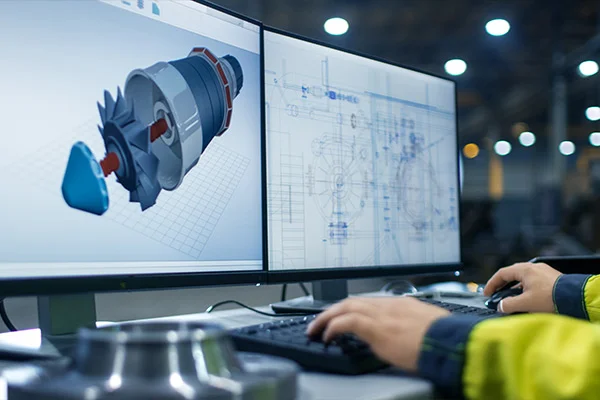
CAx Software Development for Automotive Design: Enabling Innovation and Efficiency
Table of content Evolution of Automotive Design: From Analog to Digital Realms Enabling Innovation: Pushing Boundaries of Creativity Enhancing Efficiency: Streamlining Design and Development Shaping the Future of Mobility: CAx Software and Beyond Conclusion In the realm of automotive design, the convergence of technology and creativity has revolutionized how vehicles are conceptualized, designed, and manufactured. Central to this transformation is Computer-Aided Design (CAx) software, a vital tool that empowers designers and engineers to visualize, iterate, and refine their ideas in a virtual environment before translating them into tangible vehicles. In this article, we delve into the pivotal role of CAx software development in the automotive design sector, exploring how it drives innovation, enhances efficiency, and shapes the future of mobility. Evolution of Automotive Design: From Analog to Digital Realms Before the advent of CAx software, automotive design was a labor-intensive process reliant on manual sketches, clay models, and physical prototypes. The iterative nature of design required significant time and resources, leading to lengthy development cycles. However, the digital revolution changed the game entirely. CAx software emerged as a transformative tool, allowing designers to create intricate and precise 2D and 3D models on computers. The shift from traditional drafting boards to digital workstations marked a paradigm shift, as it facilitated rapid exploration of design concepts, easy modifications, and collaborative sharing of ideas across teams and geographical boundaries. This digital transformation was a key catalyst for the innovation and efficiency that now define the automotive design landscape. Enabling Innovation: Pushing Boundaries of Creativity CAx software development has propelled innovation in automotive design by providing designers with a canvas where imagination knows no limits. The software’s capabilities extend far beyond mere geometric representations – they enable the integration of engineering, ergonomics, aesthetics, and functionality into a single cohesive design. ● Concept Exploration CAx software empowers designers to explore a wide array of design alternatives quickly and efficiently. Through parametric modeling, designers can manipulate variables such as proportions, dimensions, and features in real-time, instantly visualizing the impact of each change. This flexibility encourages bold experimentation and innovation in vehicle design, as designers can push the boundaries of traditional aesthetics and challenge conventional notions. ● Advanced Visualization Modern CAx tools incorporate realistic rendering and simulation capabilities, allowing designers to visualize materials, lighting, and environmental interactions accurately. This empowers them to make informed decisions about the visual and tactile aspects of the vehicle, resulting in designs that are not just visually striking but also functional and aligned with user expectations. ● Integration of Cutting-Edge Technologies CAx software has evolved to integrate emerging technologies like Virtual Reality (VR) and Augmented Reality (AR). These technologies enable immersive experiences where designers can interact with their designs in virtual spaces. For instance, designers can “walk around” a virtual car, examining its proportions and features from all angles, leading to more comprehensive and insightful design evaluations. Enhancing Efficiency: Streamlining Design and Development Efficiency is at the heart of CAx software’s impact on automotive design. It accelerates the entire design and development lifecycle, from initial concept to final manufacturing, resulting in faster time-to-market and reduced costs. ● Parametric Design One of the key features of CAx software is parametric modeling, which links various design elements together with equations and constraints. This means that when one aspect of the design changes, other related elements adjust automatically. This significantly speeds up the design iteration process, allowing designers to explore numerous possibilities quickly. ● Digital Prototyping CAx software eliminates the need for physical prototypes in the early design stages. Digital prototyping involves creating virtual representations of the vehicle’s components and digitally testing their fit, function, and interaction. This approach reduces the need for costly physical iterations and accelerates the design validation process. ● Collaborative Workflows CAx software enables seamless collaboration between designers, engineers, and other stakeholders, regardless of geographical location. This fosters an environment where multidisciplinary teams can work together in real-time, share feedback, and collectively refine the design. Such collaboration reduces communication gaps and ensures that the final design aligns with both creative and technical requirements. ● Data-Driven Decision Making CAx software generates a wealth of data throughout the design process. Designers can analyze this data to make informed decisions about the design’s feasibility, performance, and manufacturability. This data-driven approach minimizes the risk of design flaws and optimizes the final product for real-world production. Shaping the Future of Mobility: CAx Software and Beyond The trajectory of CAx software development in automotive design continues to evolve, guided by the dynamic landscape of mobility and technology trends. The future promises even more innovation and efficiency, driven by several key areas of development. ● Generative Design This emerging trend leverages Artificial Intelligence (AI) algorithms to explore and generate design options based on specified criteria. The generative design pushes the boundaries of what human designers can conceive by presenting novel design solutions that optimize parameters such as weight, strength, and aerodynamics. This approach will likely revolutionize automotive design by uncovering new possibilities that were previously unexplored. ● Additive Manufacturing Integration As additive manufacturing (3D printing) gains traction in the automotive industry, CAx software will be pivotal in optimizing designs for this manufacturing method. Complex geometries that were once challenging to produce using traditional methods can now be easily manufactured with additive techniques. CAx software will enable designers to create intricate lattice structures, lightweight components, and customized parts that enhance vehicle performance and reduce material waste. ● Sustainability and Electric Mobility The shift towards sustainable and electric mobility will require innovative vehicle designs that accommodate new powertrain technologies and optimize energy efficiency. CAx software will facilitate the integration of battery systems, electric drivetrains, and energy recovery systems into vehicle designs, ensuring that the transition to cleaner mobility is seamless and efficient. ● Human-Centered Design With an increasing focus on user experience, CAx software will evolve to prioritize human-centered design principles. This entails designing vehicles that prioritize safety, comfort, and accessibility for all passengers. Virtual reality and augmented reality tools will enable designers to simulate and optimize the in-car experience, leading to designs that cater to the diverse needs of
Read More
The Future of Energy Management: Trends and Innovations in EMIS
Table of content The Current Landscape Trends Shaping the Future Innovations on the Horizon Conclusion Effective energy management has become crucial in a world full of climate change challenges and rising demand for energy. Energy Management Information Systems (EMIS) have become essential instruments for lowering carbon footprints and attaining sustainable energy consumption. Looking ahead, it is evident that a convergence of cutting-edge technology and developing trends that promise to revolutionize how we produce, distribute, and use energy will determine the future of energy management. The Current Landscape Energy management has come a long way from manual tracking and reactive measures. Traditional methods of energy consumption monitoring lacked real-time insights and the ability to optimize energy usage. Enter EMIS – a comprehensive solution that integrates data collection, analysis, and decision-making to streamline energy consumption for commercial, industrial, and residential sectors. Currently, EMIS provides functions including remote monitoring, automated alarms, real-time data tracking, and specialized reporting. These features allow businesses to spot energy waste, implement efficiency measures, and track their advancement toward sustainable objectives. However, as technology advances and the demand for effective energy management grows, a fresh round of fashions and innovations is poised to reshape the industry. Trends Shaping the Future As the global landscape of energy consumption continues to evolve, several pivotal trends are emerging that promise to reshape how we manage, utilize, and sustain our energy resources. Let’s explore some of the key trends that are shaping the future of energy management: 1. Artificial Intelligence (AI) and Machine Learning (ML) AI and ML are poised to transform energy management by making it more predictive and adaptive. These technologies can analyze vast amounts of data collected from various sources, such as sensors and smart devices, to identify consumption patterns, anomalies, and optimization opportunities. This allows for the creation of predictive models that can anticipate energy demands and provide real-time recommendations for energy-saving actions. For example, AI-powered systems can automatically adjust HVAC settings based on occupancy patterns and weather forecasts, ensuring optimal comfort while minimizing energy use. 2. Internet of Things (IoT) The IoT revolution is bringing energy management to a new level of granularity. The proliferation of connected devices enables the collection of data from a multitude of sources, ranging from individual appliances to entire buildings. This data can be integrated into EMIS platforms to provide a holistic view of energy usage. Smart meters, sensors, and IoT-enabled appliances communicate with EMIS, allowing for precise tracking and control of energy consumption. This trend also promotes the development of demand-response systems, where energy use can be adjusted in real-time based on grid conditions, reducing strain during peak periods. 3. Blockchain Technology Blockchain technology holds promise in enhancing transparency, security, and efficiency in energy management. It can facilitate peer-to-peer energy trading, where individuals or organizations can buy and sell excess energy directly to one another. This decentralized approach empowers consumers to become prosumers, generating and distributing their energy while maintaining a transparent record of transactions. Blockchain also ensures data integrity in EMIS systems, reducing the risk of tampering or fraud. 4. Decentralized Energy Systems The future of energy management is moving away from centralized power generation towards decentralized systems. Distributed Energy Resources (DERs) like solar panels, wind turbines, and battery storage enable local energy production and consumption. EMIS platforms must evolve to incorporate these distributed assets, optimizing their usage and integrating them seamlessly into the energy grid. This shift promotes energy resilience, reduces transmission losses, and fosters a more sustainable and reliable energy ecosystem. 5. Energy-as-a-Service (EaaS) The concept of Energy-as-a-Service is gaining traction, where energy providers offer comprehensive solutions beyond electricity or gas supply. EaaS providers bundle energy with value-added services like energy audits, efficiency upgrades, and ongoing monitoring. EMIS will play a pivotal role in EaaS models, enabling providers to offer personalized recommendations and insights to customers. This approach aligns with the shift towards outcome-based solutions, focusing on delivering tangible energy savings and sustainability outcomes. Innovations on the Horizon As we stand on the cusp of a new era in energy management, a wave of innovative developments is poised to redefine how we interact with, harness, and optimize energy resources. Let’s delve into some of the groundbreaking innovations on the horizon for energy management: 1. Energy Forecasting and Optimization Future EMIS platforms will leverage AI and ML algorithms to forecast energy demands more accurately. These systems will analyze historical data, weather patterns, occupancy trends, and local events to predict energy consumption patterns. Organizations can optimize their operations, minimize energy waste, and reduce costs by anticipating peaks and valleys in demand. For instance, a manufacturing plant can adjust production schedules to coincide with periods of lower electricity demand, optimizing energy expenses. 2. Dynamic Pricing Integration EMIS platforms will integrate seamlessly with dynamic pricing schemes offered by energy providers. These schemes adjust energy prices based on real-time grid conditions and demand. EMIS, connected to smart meters and IoT devices, can automatically respond to these price signals. For instance, during periods of high energy demand, the system can adjust HVAC settings or delay non-essential processes to avoid peak pricing, leading to substantial cost savings. 3. Personalized Energy Efficiency As AI becomes more sophisticated, EMIS platforms will offer personalized energy efficiency recommendations to individuals and organizations. These recommendations will be based on a thorough understanding of consumption patterns, preferences, and goals. For homeowners, the system might suggest optimal thermostat settings and appliance usage schedules. Businesses could receive advice on lighting upgrades, equipment replacements, and workflow adjustments to reduce energy consumption while maintaining productivity. 4. Energy Gamification Gamification principles will be integrated into EMIS interfaces to encourage energy-saving behaviors. By turning energy efficiency into a game, users can compete with themselves or others to achieve energy reduction targets. Real-time feedback, rewards, and leaderboards can motivate individuals and teams to adopt sustainable practices. This innovation taps into human psychology, fostering a sense of accomplishment and competitiveness while contributing to overall energy conservation. 5. Energy Resilience and Disaster Preparedness With the increasing frequency of extreme weather events and grid disruptions, EMIS platforms will be critical in enhancing energy
Read More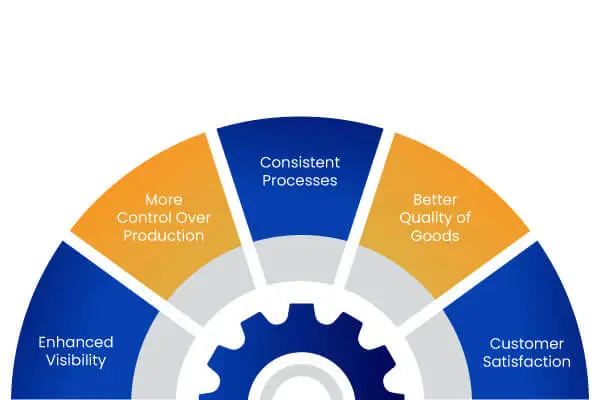
Improving Operational Efficiency with MES: A Deep Dive into its Benefits
Table of content Real-Time Visibility and ControlEnhanced Production Planning and SchedulingImproved Quality Control and TraceabilityStreamlined Inventory ManagementData-Driven Decision Making and Continuous ImprovementEnhanced Compliance and Regulatory Compliance Conclusion Operational effectiveness is crucial for companies trying to stay ahead in today’s cutthroat manufacturing environment. Manufacturing Execution Systems (MES) have changed the game by allowing producers to enhance production, streamline operations, and increase efficiency. This article thoroughly explores MES and explains how it can increase operational effectiveness in an organization. Manufacturers can use the power of MES to drive radical changes in their production processes by identifying and acknowledging the benefits of its implementation. Real-Time Visibility and Control The real-time visibility that MES gives manufacturers into their production activities enables them to monitor and manage every part of the manufacturing process. MES provides thorough insights into production indicators, machine status, work order progress, and resource use by combining data from numerous sources. This real-time visibility empowers firms to address bottlenecks, reduce downtime, and improve resource allocation. It also speeds up reaction times. Furthermore, MES facilitates centralized control over production processes, enabling manufacturers to standardize workflows, enforce best practices, and implement consistent procedures across multiple production lines or locations. By providing a unified view of operations, MES enables organizations to identify inefficiencies, streamline processes, and ensure adherence to quality standards and compliance requirements. Enhanced Production Planning and Scheduling Manufacturing Execution Systems (MES) enable enterprises to optimize their production processes, save lead times, and boost overall efficiency, revolutionizing production planning and scheduling. Resource allocation, capacity planning, and workload balancing are made possible by MES’s extensive features. By integrating real-time data on machine availability, labor capacity, and material availability, MES enables accurate production planning and scheduling. Manufacturers can optimize machine utilization, reduce idle time, and minimize changeover times, leading to increased throughput and reduced production cycle times. Additionally, MES enables dynamic rescheduling to accommodate unforeseen changes, such as rush orders or machine breakdowns, ensuring optimal production efficiency. Improved Quality Control and Traceability MES plays a pivotal role in improving quality control processes and ensuring product traceability throughout the manufacturing lifecycle. By capturing real-time data at every stage of production, MES enables manufacturers to monitor and control quality parameters, perform inspections, and enforce adherence to quality standards. Manufacturers can use automated data gathering and analysis using MES to spot and fix quality problems instantly. MES provides a framework for Statistical Process Control (SPC), allowing producers to track quality metrics, spot deviations, and quickly take corrective action. MES-driven quality control measures allow manufacturers to lower the amount of scrap, rework, and defects, improving product quality and customer satisfaction. By recording and storing complete data on materials, components, processes, and related data, MES also makes thorough product traceability possible. Manufacturers can swiftly pinpoint the underlying cause of a quality problem or product recall, carry out focused corrective actions, and lower the adverse impact on customers and brand reputation. Streamlined Inventory Management Manufacturers can optimize inventory levels, lower carrying costs, and enhance supply chain performance, thanks to MES’ all-inclusive inventory management solution. MES offers precise visibility into inventory levels, consumption rates, and material requirements through real-time data integration and analysis. By synchronizing production schedules, material availability, and customer demand, MES enables manufacturers to minimize stockouts and excess inventory. With accurate demand forecasting and just-in-time inventory management, manufacturers can achieve better inventory accuracy, reduce carrying costs, and optimize working capital. The automation of material replenishment procedures, the provision of real-time inventory updates, and the facilitation of seamless coordination between production, procurement, and warehousing operations are ways in which MES facilitates effective material flow and control. As a result, supply chain activities are streamlined, delays are reduced, and materials are always available at the appropriate time and in the appropriate quantity. Data-Driven Decision Making and Continuous Improvement Manufacturers who use MES have access to data-driven decision-making skills, allowing them to take advantage of insights and promote efforts for continuous improvement. Massive volumes of real-time production data are collected and analyzed by MES, which offers actionable insights that support well-informed decision-making. Manufacturers can spot trends, patterns, and performance measures that affect operational effectiveness through comprehensive analytics and reporting features. Key Performance Indicators (KPIs) and customizable dashboards provided by MES enable businesses to track several metrics, including Overall Equipment Efficiency (OEE), production yield, downtime, and quality. With the use of such data, manufacturers can highlight areas for improvement, focus on bettering them, and assess the results of changing their processes. MES also supports the deployment of continuous improvement processes such as Lean and Six Sigma. It allows firms to discover waste, variability, and non-value-added operations by offering real-time visibility into processes. This enables manufacturers to implement lean principles, promote process optimization, and foster a culture of continuous improvement throughout the firm. Enhanced Compliance and Regulatory Compliance Manufacturing Execution Systems (MES) implementation improves adherence to industry norms and regulations, ensuring that manufacturers fulfill the necessary criteria and uphold regulatory compliance. For maintaining and enforcing compliance with industry-specific rules like Good Manufacturing Practices (GMP), ISO standards, and certain quality certifications, MES offers a consolidated platform. Manufacturing Execution Systems (MES) ensure that manufacturers follow the appropriate regulations and maintain consistent compliance throughout their operations by combining quality control processes, documentation management, and audit trails. With MES, manufacturers can capture and store critical data related to production processes, materials, and quality control parameters. This data is readily available for audits, inspections, and regulatory reporting, ensuring transparency and accountability. MES facilitates efficient documentation management, automating the generation and storage of critical documents, including batch records, Standard Operating Procedures (SOPs), and quality control documentation. Conclusion Manufacturing Execution Systems (MES) provide businesses with a variety of advantages targeted at enhancing operational effectiveness. Through increased production planning, quality control, inventory management, data-driven decision-making, compliance management and real-time visibility and control, MES helps businesses streamline their operations, cut costs, and promote continuous development. Manufacturers can obtain a competitive edge in the dynamic production environment by deploying MES. Organizations can make data-driven choices, react swiftly to changes, and adhere to regulations, thanks to the comprehensive functions of MES. Manufacturers may streamline operations, boost productivity, provide high-quality goods, and maintain
Read More
Introduction to Manufacturing Execution Systems (MES): The Key to Streamlining Production
Table of content Understanding Manufacturing Execution Systems Benefits of Implementing Manufacturing Execution Systems Real-time VisibilityEnhanced Production EfficiencyQuality Control and ComplianceInventory ManagementTraceability and GenealogyPerformance Analysis and Continuous Improvement Implementing Manufacturing Execution Systems Overcoming Implementation Challenges of Manufacturing Execution Systems (MES) Change ManagementScalability and FlexibilityData Security and IntegrationVendor Selection and Partnership Conclusion Organizations are always looking for ways to increase production, save costs, and improve operational efficiency in today’s competitive manufacturing environment. To accomplish these objectives, Manufacturing Execution Systems (MES) have become a crucial technological option. Enterprise Resource Planning (ERP) systems and the shop floor are connected by MES, which gives manufacturers real-time visibility and control and facilitates manufacturing operations optimization. This article is a detailed introduction to Manufacturing Execution Systems (MES), exploring their functionalities, benefits, and their pivotal role in streamlining production processes. Understanding Manufacturing Execution Systems Manufacturing Execution Systems (MES) is a group of software programs created to coordinate and direct the performance of manufacturing operations on the shop floor. To enable smooth data transmission and real-time decision-making, MES is a central hub connecting numerous systems, including equipment automation, supervisory control and data acquisition (SCADA), and ERP. Production scheduling, order management, resource allocation, quality control, inventory management, and data collecting are among the functionalities offered by MES. Manufacturers may obtain insights, spot bottlenecks, and improve processes for greater efficiency and productivity using MES to collect and analyze data at various stages of the manufacturing process. Benefits of Implementing Manufacturing Execution Systems Implementing Manufacturing Execution Systems (MES) offers numerous benefits to manufacturers, driving improvements across the entire production process. Some key benefits include: Real-time Visibility MES provides real-time visibility into production data, enabling stakeholders to monitor and track operations, identify issues, and make data-driven decisions. This transparency enhances operational control and facilitates proactive problem-solving. Enhanced Production Efficiency MES enhances manufacturing operations by optimizing workflows, lowering manual error rates, reducing downtime, and increasing resource efficiency. Data gathering, scheduling, and quality control are all automated by MES, which also ensures that activities run smoothly and effectively. Quality Control and Compliance By gathering real-time data, conducting inspections, and enforcing compliance with industry norms and laws, MES provides strict quality control. By doing this, products are guaranteed to fulfill certain quality standards, lowering the likelihood of non-compliance and rework. Inventory Management MES provides real-time visibility into inventory levels, enabling manufacturers to optimize material flow, track stock levels, and minimize stock-outs or excess inventory. This streamlines supply chain operations, reduces carrying costs, and improves overall inventory accuracy. Traceability and Genealogy MES tracks and records detailed information about each product, including its components, processes, and associated data. This enables end-to-end traceability, making it easier to identify the source of issues, conduct recalls, and comply with regulatory requirements. Performance Analysis and Continuous Improvement MES captures comprehensive data on production performance, allowing manufacturers to analyze Key Performance Indicators (KPIs), identify inefficiencies, and implement targeted improvement initiatives. This facilitates a culture of continuous improvement, driving operational excellence. Implementing Manufacturing Execution Systems Implementing Manufacturing Execution Systems (MES) requires careful planning, collaboration, and adherence to best practices. The key steps in the implementation process include: Overcoming Implementation Challenges of Manufacturing Execution Systems (MES) Organizations must overcome a number of obstacles while implementing Manufacturing Execution Systems (MES) to achieve a successful rollout. Maximizing the advantages of MES in simplifying production requires understanding and overcoming certain implementation hurdles. Change Management Introducing MES involves significant changes in processes, workflows, and employee roles. Resistance to change and lack of employee buy-in can hinder successful implementation. It is essential to establish a comprehensive change management plan that involves effective communication, training programs, and engaging employees at all levels. Organizations can overcome resistance and ensure a smooth transition by addressing concerns, providing support, and fostering a positive attitude towards MES. Scalability and Flexibility Organizations must consider the scalability and flexibility of MES to accommodate future growth and evolving production needs. MES should be designed with modularity and extensibility in mind, allowing for easy integration with new technologies and adaptability to changing requirements. Choosing a flexible MES solution that can scale with the organization’s growth ensures long-term success and minimizes the need for disruptive system replacements in the future. Data Security and Integration Critical issues include safeguarding sensitive production data and ensuring secure integration with existing systems. Strong data security measures, including encryption, access controls, and regular vulnerability assessments, are necessary for MES implementation. Establishing safe data-sharing protocols and ensuring compliance with pertinent industry norms and standards need close cooperation with IT teams. Vendor Selection and Partnership Selecting the right MES vendor and establishing a strong partnership is crucial for successful implementation. Organizations should thoroughly evaluate vendors based on their industry expertise, track record, support services, and alignment with the organization’s goals. Collaborating closely with the chosen vendor, establishing clear expectations, and maintaining open communication throughout the implementation process is key to overcoming challenges and achieving successful outcomes. Conclusion Manufacturing Execution Systems (MES) have developed into essential tools for businesses aiming to increase productivity, streamline processes, and grow sustainably. MES improves productivity, quality, and decision-making by offering real-time visibility, control, and optimization of manufacturing processes. A successful manufacturing organization must deploy MES because of its advantages, which include improved quality control, increased production efficiency, and simplified inventory management. Adopting MES is a strategic decision for enterprises as they strive for operational excellence and competitiveness. Manufacturers may alter their manufacturing processes, lower costs, increase customer satisfaction and promote continuous improvement by leveraging MES. Manufacturers are well-equipped to handle the changing manufacturing landscape and prevail in the more fiercely competitive global market when they use MES as a cornerstone of their digital transformation plan.Ready to streamline your production processes with the power of Manufacturing Execution Systems (MES)? Partner with Prescient to implement a seamless MES solution tailored to your organization’s needs. Contact us today and revolutionize your production efficiency with Prescient’s expertise and cutting-edge technology.
Read More